Snow Wolf M41A Pulse Rifle (Aliens) · Volume 3
Power, FPS & Rate of Fire
3.1 What the AEG Delivers
The M41A’s performance envelope is set by three components working together: the 8.4 V stick battery, the Tokyo Marui EG700-type motor, and the Version 6 gearbox described in Volume 2. As an electric gun its great advantage over the gas platforms covered elsewhere in this hub is consistency — an AEG fires at the same FPS on a cold morning as it does on a hot afternoon, all day, on a battery charge, with none of the per-shot cool-down that afflicts gas guns. The trade is that an AEG’s recoil is nominal and its mechanism is purely a means to launch the BB rather than a simulation of the firearm’s action. For a display-and-occasional-skirmish gun like the M41A, that trade is exactly right.
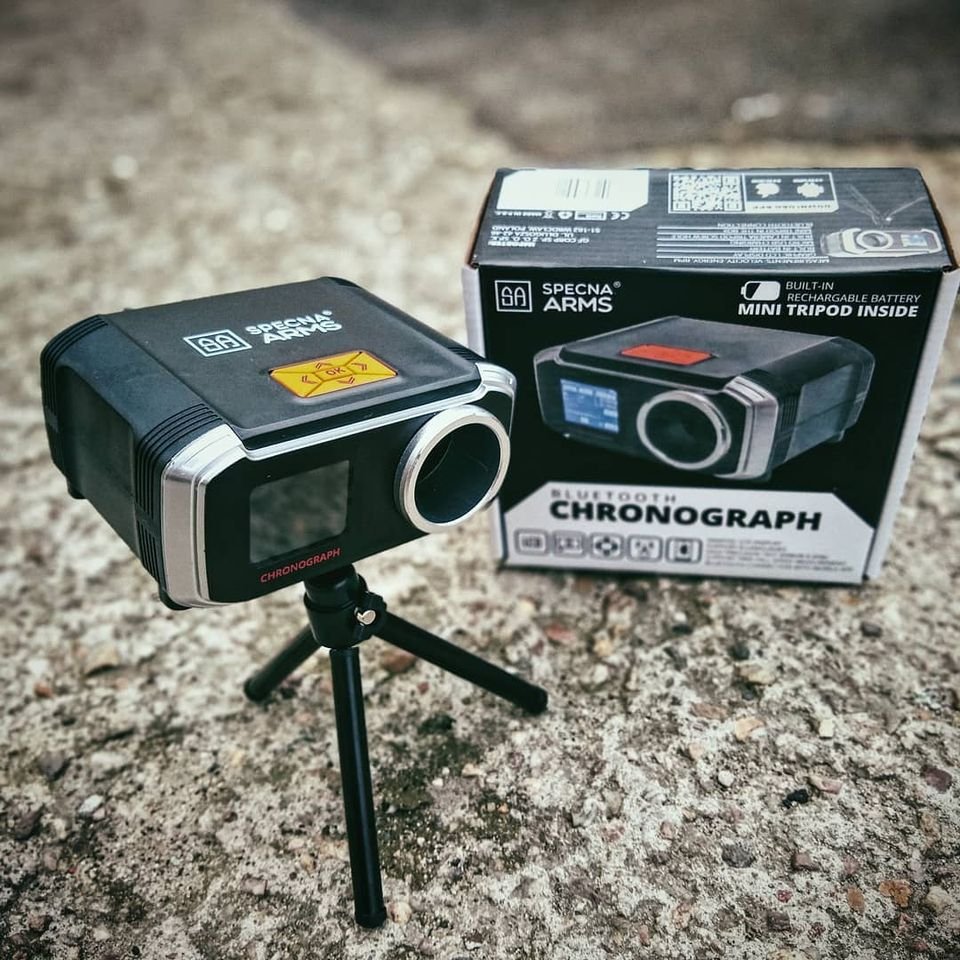
The quoted muzzle velocity is ~360 FPS on a 0.20 g BB, with various retailers listing the figure anywhere from 350 to 380 FPS — treat the spread as typical/approx, since chrono readings vary with the individual gun, the hop-up setting, and the BB used. At 360 FPS on 0.20 g the gun sits right around 1.2 joules, which places it in the mainstream rifle band: hot enough for outdoor skirmish at most fields, and usually within standard AEG/rifle limits, though almost always above the tighter caps used for indoor CQB. Always chrono to the local field’s posture before play.
Table 1 — What the AEG Delivers
| FPS (0.20 g) | Approx. joules | Field context |
|---|---|---|
| 350 | ~1.14 J | Typical AEG limit; many outdoor fields |
| 360 | ~1.2 J | This gun’s nominal output |
| 380 | ~1.34 J | Upper end of the reported spread |
3.2 Battery Guidance
The M41A is built around an 8.4 V stick-type battery with a small Tamiya connector, housed (as Volume 2 explains) inside the dummy grenade-launcher pump. The 8.4 V format is not arbitrary — it is the cell shape that fits that cavity, so battery choice is constrained more by physical fit than by a free hand on voltage. An 8.4 V NiMH stick is the safe, manufacturer-aligned default: it suits the EG700 motor and V6 gearbox without overstressing them, and it sidesteps the charging discipline and fit issues a LiPo swap would introduce. The battery is not included, so it is a required first purchase alongside the gun.
A few practical notes. The launcher cavity sets a hard limit on battery dimensions, so confirm a candidate stick physically fits before buying. The small Tamiya (mini-Tamiya) connector is standard for this class, but verify the connector on any replacement. And because the digital round counter runs on its own separate 9 V battery (Volume 2), the firing battery and the counter battery are two distinct consumables to keep stocked — running the gun does not power the counter, and powering the counter does nothing for the gun.
3.3 Rate of Fire
Rate of fire on an 8.4 V NiMH through the EG700/V6 combination lands in the ordinary AEG range — a moderate, controllable cyclic rate rather than the blistering ROF of a high-voltage competition build. Snow Wolf does not publish a headline rounds-per-minute figure, and any specific number should be treated as typical/approx for the class; the honest characterization is “standard full-auto cadence for an 8.4 V stick-fed V6,” well-matched to the 190-round hi-cap magazine. For a gun whose primary role is display and whose secondary role is light skirmish, that moderate ROF is appropriate — it is easy on the gearbox and easy to control, and it keeps the magazine and battery lasting through a reasonable amount of play.
Pushing ROF higher would mean a higher-voltage battery, but the launcher-cavity fit constraint and the gun’s collector-piece positioning both argue against chasing rate of fire here. This is not the platform to turn into a high-cycle race gun; it is a platform to keep running reliably so the iconic body and the working counter stay the focus.
3.4 A Note on Joule Creep
One performance subtlety worth flagging applies to every airsoft gun, including this one: joule creep — the phenomenon where switching to a heavier BB can raise muzzle energy in joules even with no mechanical change, because the heavier BB dwells longer in the barrel and extracts more of the gas (or, here, the air pulse from the cylinder) before it exits. AEGs with tightly matched cylinders show comparatively little creep, so the effect is modest on a gun like the M41A relative to a gas blowback rifle — but it is the reason fields that care about safety chrono in joules on a known BB weight rather than trusting an FPS reading on a 0.20 g BB. The full treatment of FPS-to-energy conversion, joule creep, and field/joule limits lives in the gas series, which handles the highest-creep platforms in detail: see the Airsoft Gas deep dive.
Comments (0)