Umarex GLOCK 17 Gen3 · Volume 3
Green Gas vs CO₂
3.1 Two SKUs, One Platform
The defining feature of the Umarex/Elite Force GLOCK 17 Gen3 — the thing that makes it worth its own volume — is that it does not ship as one gun with a choice of magazines. It ships as two separate, distinct SKUs: a green-gas version and a CO₂ version, each with its own propellant system, its own magazine, and its own behavior. They share the licensed Gen3 chassis, the aluminum slide, the polymer frame, and the 97 mm hop-up barrel, but they are tuned around two very different propellants, and choosing between them is the central buying decision for this platform. This volume contrasts them directly. For the underlying propellant chemistry, vapor-pressure curves, and the metal-versus-plastic durability question across the whole gas family, see the Airsoft Gas deep dive.
3.2 The Green-Gas Version
Green gas is filtered propane with a little silicone oil added to lubricate the seals on every fill — chemically it is propane, and it runs around 100–110 psi at room temperature. The green-gas Gen3 is a full gas-blowback gun: the metal slide cycles its full stroke, locks back on empty, and delivers the snappy recoil the platform is known for. Out of the box on 0.20 g BBs it chronographs around 290–300 fps (the listing spread runs 280–310 depending on retailer and temperature). The gas and BBs both live in the green-gas magazine, which holds roughly 20–22 rounds and fills through a valve in the baseplate; the package typically includes one magazine.
The green-gas gun is the one most reviewers reach for when they want the authentic experience — full slide cycle, correct lock-back, the manual of arms intact. It runs at a pressure the gun was comfortably designed around, so it is the gentler of the two on the internals.
3.3 The CO₂ Version
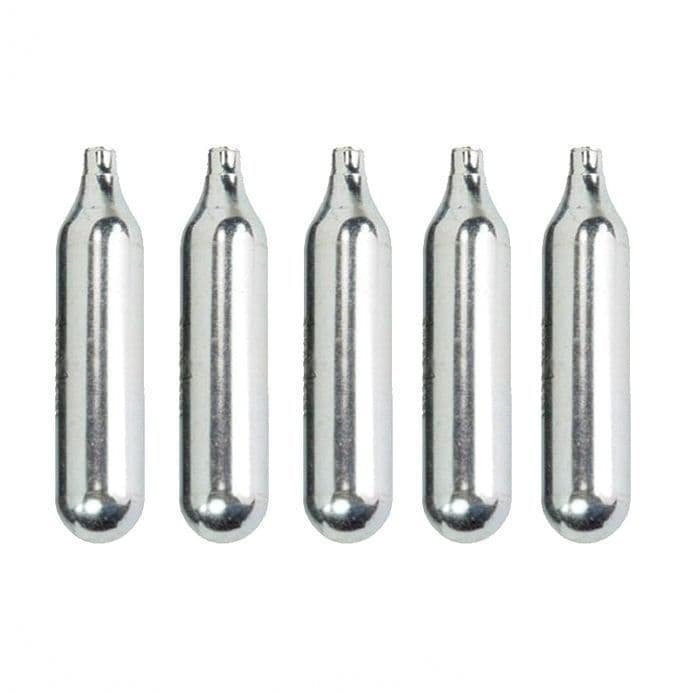
The CO₂ Gen3 houses a single 12 g CO₂ capsule inside the magazine, and that changes almost everything downstream. CO₂ runs at roughly 830 psi at 70 °F — on the order of seven to eight times green gas’s pressure — and that pressure shows up in three ways.
First, velocity is higher: the CO₂ SKU is listed around 320–330 fps on 0.20 g, comfortably above the green-gas gun. (A 365 fps figure sometimes cited for CO₂ Glocks generally was not confirmed for this specific SKU — 320–330 is what the listing states.) Second, capacity is lower: the CO₂ magazine holds only 14 rounds, because the 12 g capsule occupies the space the green-gas mag uses for gas and BBs — though the CO₂ package ships with two magazines to offset that. Third, and most important, the blowback is frequently reduced: while some listings call it “realistic blowback,” the CO₂ Gen3 is widely sold elsewhere as half-blowback or non-blowback (NBB) — the slide does not fully cycle. Verify the exact SKU before assuming a CO₂ gun gives full slide travel.
3.4 Contrasting Them Head to Head
Table 1 — Contrasting Them Head to Head
| Property | Green gas | CO₂ |
|---|---|---|
| Stock FPS (0.20 g) | ~290–300 (typical) | ~320–330 (typical) |
| Pressure @ 70 °F | ~100–110 psi | ~830 psi |
| Blowback | Full | Often half / NBB — verify SKU |
| Mag capacity | ~20–22 rds | 14 rds |
| Mags in box | 1 (typical) | 2 |
| Cold-weather output | Sags as temp drops | Holds up better |
| Wear on parts | Design-point — gentler | Higher — harder on internals |
3.5 The Cold-Weather Edge — and the Cost
The most genuine functional advantage CO₂ offers is cold weather. Every gas gun loses output as temperature falls, because the liquefied propellant in the magazine sits at its saturation pressure for the current temperature — cool the magazine and that pressure slides down its vapor-pressure curve, so each shot launches with less energy, and rapid fire chills the magazine further from the inside (vaporizing liquid is endothermic). Green gas, at its modest base pressure, sags noticeably on a cold day and can begin to short-stroke. CO₂’s much higher base pressure gives it far more margin before the gun goes limp, which is exactly why winter and cold-climate shooters are drawn to the CO₂ SKU.
That edge is not free. CO₂’s pressure is harder on the gun — seals, the nozzle, and the slide all see a stiffer pressure spike every shot, which is part of why the CO₂ variant is often built with reduced blowback in the first place. The trade is real and it cuts both ways: the green-gas gun is the more authentic, full-cycling, internals-friendly experience that fades in the cold; the CO₂ gun hits harder, runs in winter, ships with two mags, but gives up capacity, frequently gives up full blowback, and works the platform harder. Which of those trades is the right one is the heart of the buy decision in Volume 5. The deeper treatment of vapor pressure, per-shot cool-down, and how each propellant stresses a gun lives in the Airsoft Gas deep dive.
Comments (0)