G&G CM16 Raider 2.0 · Volume 4
Upgrades & Maintenance
4.1 Why This Gun Is the One to Upgrade
The Raider’s single greatest long-term virtue is that it is built on the Version 2 gearbox and the M4 platform — the two most-supported standards in airsoft. That means the upgrade path is not a scavenger hunt for proprietary parts; it is the best-stocked aftermarket in the sport. Nearly every internal, every stick of furniture, and every rail accessory ever made for an airsoft M4 fits. A new player who outgrows the stock gun does not replace it — they tune it, and everything they buy is a standard part with a hundred tutorials behind it.
4.2 The Smart Upgrade Order
Upgrades have a natural sequence, because the cheap ones return the most accuracy per dollar and the expensive ones only pay off once the cheap ones are done. The order most experienced builders follow:
Table 1 — Upgrades have a natural sequence, because the cheap ones return the most accuracy per dollar and the expensive ones only pay off once the cheap ones are done. The order most experienced builders follow
| Order | Upgrade | Typical cost | What it buys |
|---|---|---|---|
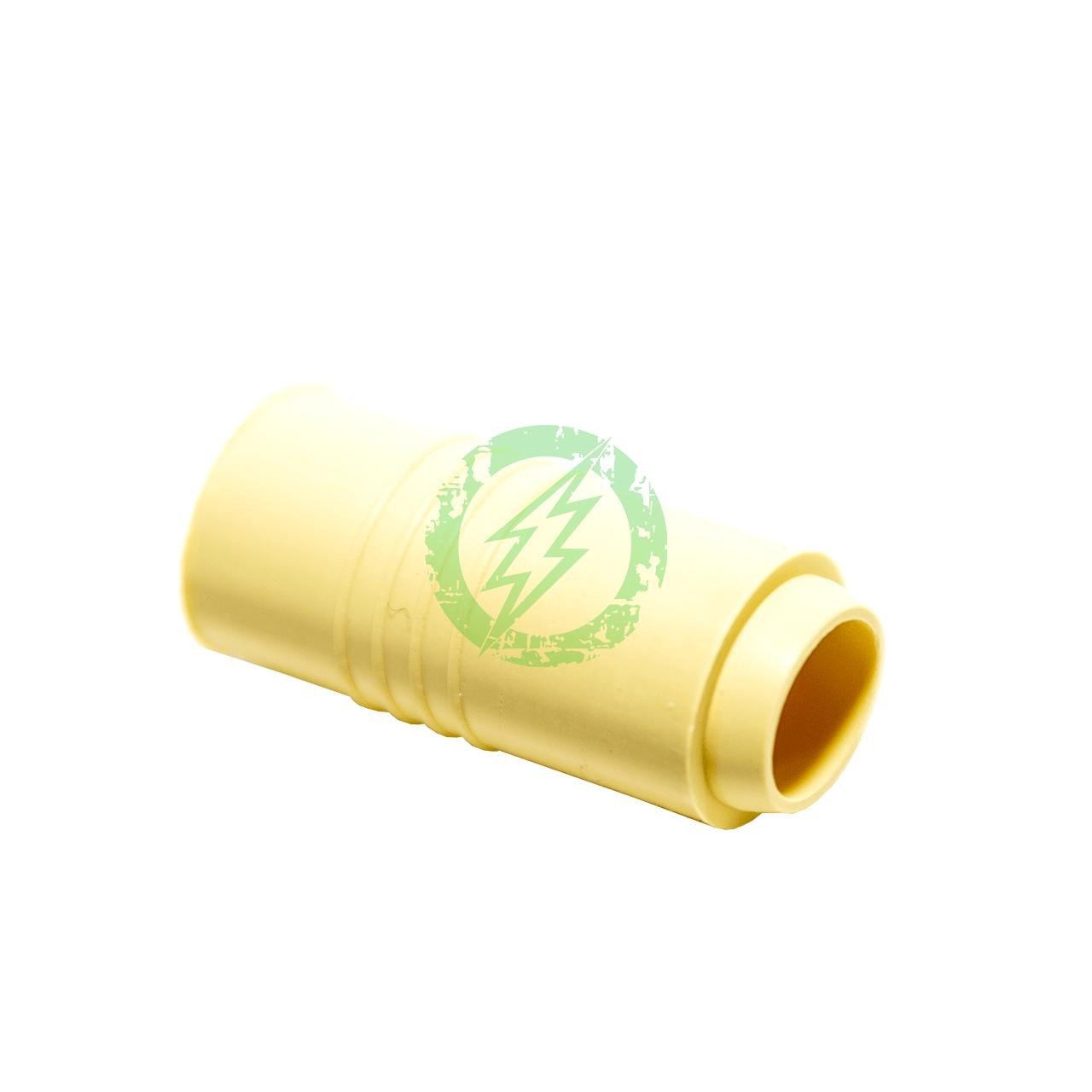
| 1 | Hop-up bucking (Maple Leaf / Modify) | ~$10–15 | Consistency and range — the biggest accuracy gain per dollar |
| 2 | Battery → 7.4V/11.1V LiPo + smart charger | ~$30–50 | Better trigger response and ROF |
| 3 | Tightbore inner barrel (Prometheus / ZCI 6.03) | ~$30–40 | Tighter groups, slight FPS gain |
| 4 | MOSFET (plain 2.0 only) | ~$20–30 | LiPo-safe switching + contact protection |
| 5 | Motor (ASG Infinity / SHS high-torque) | ~$40–70 | ROF or trigger snap, depending on type |
| 6 | Spring (V2-standard) | ~$10 | Re-tune FPS to a target field limit |
The headline is that the hop-up bucking is the first thing to swap, not the barrel and not the spring. The stock bucking is the Raider’s weakest internal for accuracy, and a quality replacement plus correct hop adjustment transforms how the gun shoots before a single dollar goes to FPS.
4.3 FPS and Spring Changes
Muzzle velocity is set by the main spring, and changing it is a standard V2 job. Springs are sold by a class number (the stock spring is in the M100 class, consistent with the ~350–370 fps stock velocity — that designation is community consensus, not a G&G spec, so treat it as approx). Stepping up to an M110/M120 raises FPS; stepping down de-fangs the gun for CQB. The critical caveat: changing the spring means opening the gearbox, and raising FPS materially is the point at which the V2’s stress points start to matter (below). Spring changes should be done as part of a considered build, chronographed to the target field limit in joules, not bumped up casually.
4.4 The M4 Aftermarket — Externals
Because it is an M4, the Raider’s externals are entirely interchangeable. The M-LOK handguard can be swapped for any M-LOK or rail handguard; the carbine stock swaps for any mil-spec or commercial AR-pattern airsoft stock; the pistol grip, flash hider (14 mm CCW thread, so any 14 mm CCW muzzle device or tracer unit threads right on), and sights are all standard parts. Furniture, rails, foregrips, optics mounts — the entire cosmetic and ergonomic build-out is open, which is a large part of why the platform holds a player’s interest long-term.
4.5 Maintenance
A Raider rewards modest, regular care:
- Clean the barrel periodically with an unjamming/cleaning rod and a lightly oiled patch; a clean bore is half of consistent accuracy.
- Lubricate correctly — silicone oil on the hop bucking and nozzle area; gearbox internals get the proper grease only when the box is open, never spray oil into the mechbox.
- BB quality and weight — use seamless, polished BBs (cheap BBs cause jams and feed problems), and run 0.25 g or heavier outdoors for stability; 0.28 g pairs well once the bucking is upgraded.
- Battery discipline — store LiPo at storage voltage, never run a LiPo flat, and charge on a balance charger.
4.6 Weak Points to Know
No entry AEG is without compromises, and the Raider’s are well-documented:
The V2 gearbox stress points. The Version 2 shell is famous for cracking around the cylinder window and the front of the shell under sustained high-stress use — particularly with a stronger spring and an aggressive battery. The fix is well-known: a reinforced V2 shell or at minimum careful shimming and a correct sector/cylinder match. The stock sector gear and cylinder are fine at stock power; pushing FPS hard is exactly when their tolerances begin to matter, and a high-FPS build should plan a cylinder/port match and reinforced shell from the start.
The nylon-fiber receiver. The receiver and furniture are reinforced nylon-fiber polymer — genuinely tough and impact-resistant, and a real asset for a gun that gets dropped and crawled with — but it is not metal. Owners who want a metal receiver are looking at a full receiver swap, which on an M4 is doable but non-trivial. For most players the polymer is a feature (light, durable, cheap to replace) rather than a flaw, but it is worth understanding before buying it expecting an all-metal gun.
Stock hop bucking and full-auto accuracy. As above, the stock bucking is the first thing to replace. Reviewers also note the gun is more accurate on semi than on full-auto with iron sights — unsurprising for the platform — and a few have reported occasional feeding/jam issues in direct heat/sun, a reminder that polymer mags and buckings dislike baking on a hot range. None of these are dealbreakers; they are the known character of a well-understood gun.
The throughline is that every one of these weak points has a standard, documented, cheap fix — which is the whole reason the Raider is the platform to learn on. Volume 5 turns to which version and trim to actually buy.
Comments (0)