The Blanchard Lathe · Volume 5
What It Made Beyond Gunstocks
The gunstock was the application that got the machine invented and paid the nine-cent royalty, but it was never the biggest business. A machine that copies any irregular wooden form is a machine that copies a lot of things people used to whittle by hand, and Blanchard — a relentless licenser — spread the principle across the whole nineteenth-century economy of shaped wood. This volume covers the sprawl: what else the lathe made, and the licensing empire that put “over fifty” of these machines to work.
5.1 The Product List
Confirmed across multiple sources, Blanchard-type lathes turned out:
- Shoe lasts — the foot-shaped wooden forms cobblers build shoes around. One account claims six to ten pairs per hour on a single machine, and the technology is credited with helping standardize shoe sizing — a genuinely large downstream effect, since consistent lasts are a precondition for consistent sizes.12
- Axe handles and tool/hatchet handles — the classic curved, non-round handle, exactly the kind of shape that resists ordinary turning.
- Wheel spokes — tapered, shaped, and produced in enormous quantity for the wagon and carriage trade.
- Hat blocks and hat forms — the head-shaped forms milliners blocked hats over.
- Tackle blocks — the shaped wooden shells of ship’s pulley blocks.
- Piano legs and wig stands — decorative shaped work.
- Plaster and wood busts — the application Blanchard famously demonstrated before Congress in the Capitol Rotunda around 1840, carving portrait busts to argue for his patent extension (Volume 2).1
One item on the brief’s list deserves a flag: oars. Oars are a natural fit for the “irregular wooden form” category and are highly plausible, but the research found no source that independently confirms Blanchard-type lathes made oars. This series lists oars as plausible-but-unverified rather than as fact.
5.2 The Shape of the Product List
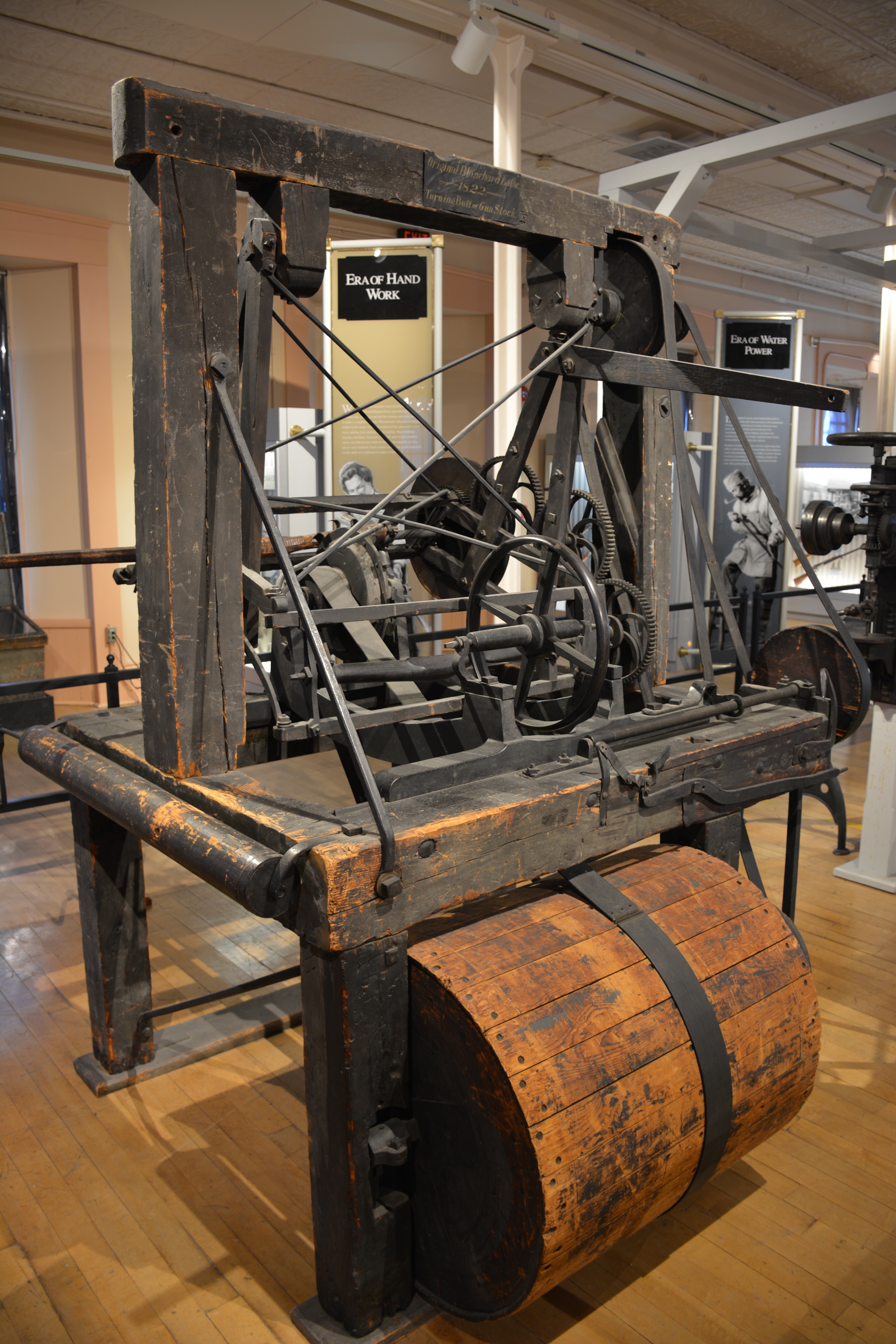
Step back and the list has a logic a machinist will recognize instantly. Every item is a shaped, non-round, repeated-in-quantity wooden part — the exact overlap of “can’t be made on a plain lathe” and “needed by the thousand.” Shoe lasts and hat blocks are body-form copies; handles and spokes are tapered asymmetric sticks; tackle blocks and busts are free-form solids. Anything symmetric (a rung, a dowel, a baseball bat) stayed on the ordinary lathe because it did not need Blanchard’s machine. The copying lathe carved out precisely the niche of high-volume irregular wooden forms, and it dominated that niche for decades.
There is a second-order effect worth naming, because it shows how deep the machine reached into daily life. Standardized shoe lasts did not just make shoes faster to build; they made shoe sizes mean something. Before consistent lasts, “a size 9” was whatever a given cobbler’s block happened to be; a machine that reproduced an identical last, thousands of times, is a precondition for the ready-made, sized footwear industry that followed. The same logic runs through the rest of the list — a wheelwright buying identical spokes, a hatter blocking on identical forms, a rigger fitting identical tackle-block shells. The copying lathe did not just speed up shaped-wood work; it made shaped-wood parts interchangeable within their own trades, which is a quieter version of the very interchangeability story Volume 6 examines for firearms.
5.3 The Licensing Empire
Blanchard did not run one factory; he ran a patent. His business model was licensing the principle, and the reach was wide: during the patent’s first term, one account records “no less than fifty machines… in operation for various purposes, turning shoe lasts, wheel spokes, tackle blocks and hat forms.”1 By the 1840s extension fight, the piracy problem had grown to “over fifty unauthorized machines… across the country, including Canada” — a number that tells you both how valuable the principle was and how hard it was to defend.1
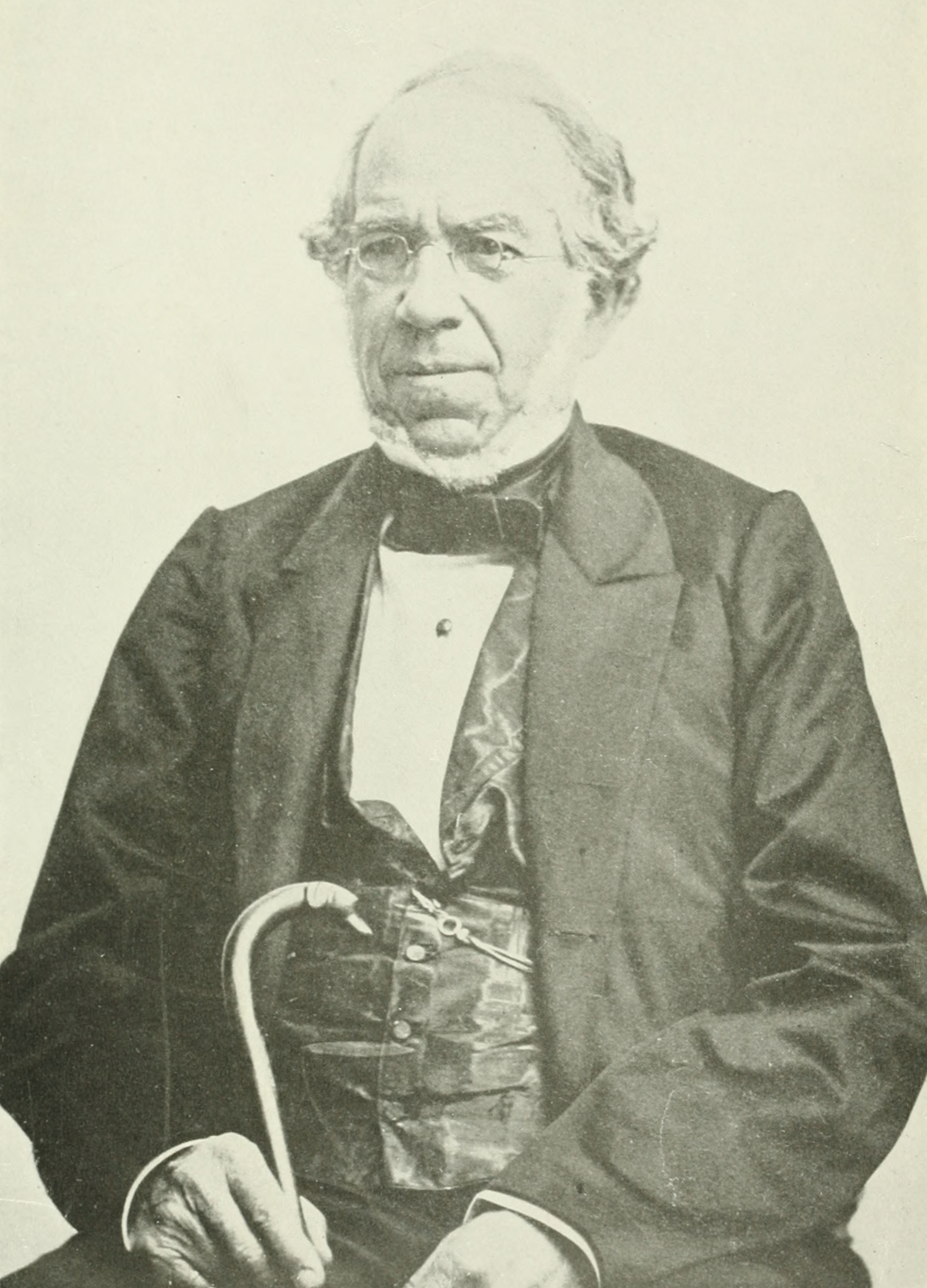
This licensing sprawl is why the machine matters far beyond firearms, and it is also why Blanchard held roughly two dozen patents (sources vary between about 24 and 25-plus) across his life.34 The gunstock lathe was the crown, but he was a career inventor with a portfolio, managing it aggressively — the subject of Carolyn Cooper’s Shaping Invention, flagged elsewhere in this series as the definitive (and, for this research pass, un-fetchable) source on exactly that management.
5.4 The Later Blockbuster: Wood Bending
Worth noting because it is often mentioned alongside the copying lathe but is a distinct invention: Blanchard’s wood-bending machine, patented around 1849-1851, for bending ship timbers and other heavy stock. One source calls it his most commercially lucrative invention, reportedly earning $150,000 from shipbuilding applications alone.3 This is not the copying lathe and should not be conflated with it — but it rounds out the picture of Blanchard as a man whose single best-known machine (the one this series is about) was, financially, not even his biggest hit.
5.5 Why This Volume Belongs in a Firearms Dive
Because it reframes the copying lathe correctly. To a gunsmith it looks like a gunstock machine; historically it was a general-purpose irregular-form copier that happened to get its start on gunstocks at a government armory. The gun connection gave it prestige, a captive high-volume customer, and a royalty; the rest of the economy gave it scale. When Volume 6 argues about the American System of Manufactures, keep this breadth in mind — the same machine that standardized musket stocks was, at the same time, standardizing the shoes on people’s feet.
5.6 Bibliography
Footnotes
-
George Iles, Leading American Inventors (1912), reproduced at todayinsci.com — source of the shoe-last rate, the busts/Congress demonstration, and the “fifty machines” figure. Secondary. ↩ ↩2 ↩3 ↩4
-
The Henry Ford, “Thomas Blanchard’s Wood Copying Lathe” (shoe-last standardization). https://www.thehenryford.org/explore/blog/thomas-blanchard-s-wood-copying-lathe/ ↩
-
Wikipedia, “Thomas Blanchard (inventor)” (patent count; wood-bending machine and the $150,000 figure). https://en.wikipedia.org/wiki/Thomas_Blanchard_(inventor) ↩ ↩2
-
Orchid Advisors, “Thomas Blanchard - Gunstock Duplicating Lathe Inventor” (patent count). https://orchidadvisors.com/thomas-blanchard-gunstock-duplicating-lathe-inventor/ ↩
Comments (0)